Roof leaking in Springfield, MO?
Catch the water, cut power near it, take photos, and stay off the roof. Run the safe 10-minute steps below, or call now for roof leak repair or an emergency tarp from a local roofer serving Springfield, Nixa, Ozark and Republic.
Springfield Roof Leak Help is a free info site, not a roofing company. This number connects you to a local roofing contractor who sets their own pricing and schedule.
- Leak, storm & ice-dam help
- Safety-first advice
- Updated Nov 18, 2026
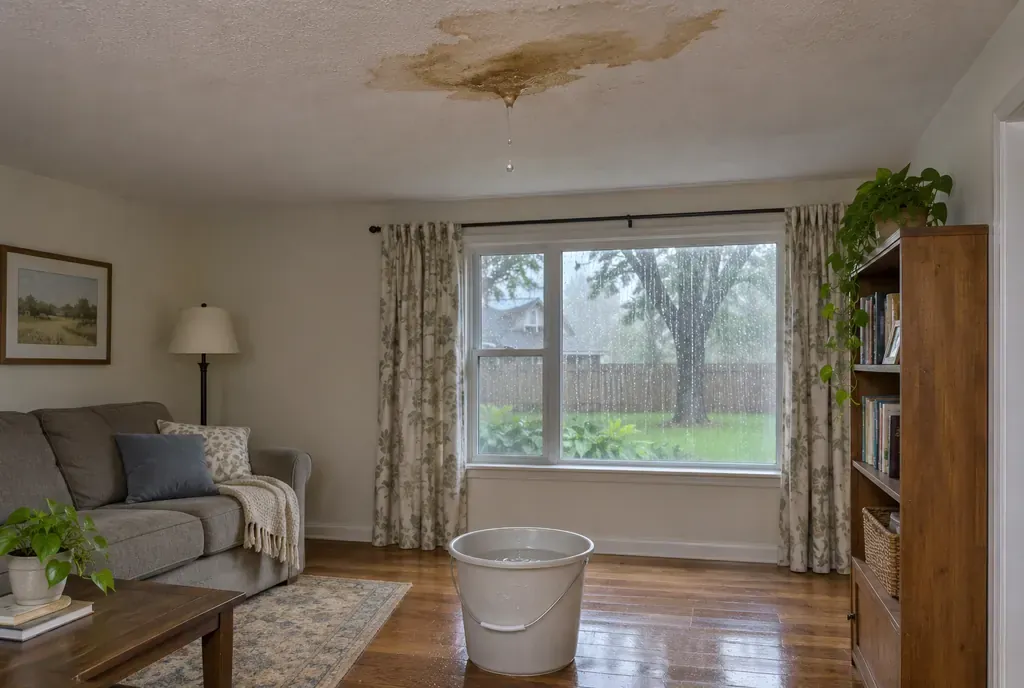
Roof leaking? The short answer
A roof leak rarely comes from straight above the stain. Water gets in at a joint, usually around a vent pipe, chimney, skylight or valley, then runs along the wood until it finds a low spot in your ceiling. Limit the damage inside first; finding the entry point is a roofer's job.
Not every ceiling stain is the roof. Plumbing, an attic AC drain and winter condensation can all look the same from below. The checklist helps you tell them apart and keeps things from getting worse while you wait.
Updated November 18, 2026 · Written for homeowners in Springfield and Greene County, MO · Sources
Water near wiring, or a ceiling that's sagging? Switch off the breaker for that area, keep everyone out from under it, and don't touch wet fixtures. If a tree or power line is on the house, get out and call 911 or your electric utility.
10-minute checklist before you call
Everything here is done from inside the house or from the ground. Do not go on the roof.
- Catch the water and clear the area. Put a bucket under the drip and towels around it. Move furniture, rugs and electronics, or cover them with plastic.
- Cut power near the water. If water is near a light, ceiling fan or outlet, switch off that circuit at the breaker panel. Don't touch a wet fixture or switch.
- Relieve a bulging ceiling. A paint bubble or sagging patch is holding water. If it's away from any light fixture, poke a small hole at the lowest point with a screwdriver and let it drain into a bucket. That keeps the water from spreading across the ceiling.
- Take photos and video. Get the drip, the stain, the ceiling and anything damaged, and note the date, time and weather. You'll want these for the roofer and for an insurance claim.
- Check the attic, if you can do it safely. Use a flashlight and step only on the wood framing, never on drywall or insulation. Look for wet wood or a drip and set a bucket on a board laid across the joists.
- Ask whether it's really the roof. A roof leak shows up during or just after rain or snowmelt. A stain that grows in dry weather is more likely plumbing, an AC drain line or attic condensation.
- Look at the roof from the ground only. Walk the yard and look for missing or lifted shingles, bent metal at the chimney, a fallen limb or overflowing gutters. Binoculars help. Don't climb up.
- Call a roofer, and your insurer if a storm caused it. Ask for a temporary tarp or patch if the weather won't allow a repair yet. Keep receipts for anything you spend limiting the damage.
Water still coming in, or more rain on the way? That needs a roofer. Call and tell them what you found.
Call (417) 647-4675
Why not just go up and look?
Wet shingles are slick, and the damage that leaks is usually small and easy to miss. Falls from roofs and ladders cause serious injuries every year; ladders rank among the top 20 product groups for injuries in federal consumer-safety data.[5] A roofer has the footwear, the harness and the trained eye.
What the leak is telling you
When and where the water shows up narrows the cause down fast. It's also what a roofer will ask you on the phone.
| What you notice | Likely cause | Who fixes it |
|---|---|---|
| Drip or stain during or right after rain | Leak at a vent pipe, flashing, valley or damaged shingles | Roofer |
| Stain near a chimney, skylight or vent pipe | Failed flashing or a cracked pipe boot | Roofer |
| Leaks only in wind-driven rain | Lifted shingles, ridge vent or wall flashing | Roofer |
| Stain along an outside wall after snow or ice | Ice dam backing water under the shingles | Roofer |
| Damp attic or frost on nails, no rain | Condensation from poor ventilation or a bath fan venting into the attic | Roofer or insulation contractor |
| Stain grows in dry weather, or sits below a bathroom | Plumbing leak, not the roof | Plumber |
| Water near an attic AC unit in summer | Clogged condensate drain | HVAC technician |
| Gutters overflowing, water behind the fascia | Clogged gutters or downspouts | Clean gutters from a stable ladder or a pro |
| Sagging ceiling, or water at a light fixture | Water pooling above the drywall or reaching wiring | Power off, stay clear, call now |
7 reasons a roof leaks
1. A cracked vent pipe boot
Each plumbing vent comes through the roof inside a rubber collar. After years of sun the rubber splits, and rain runs down the pipe into the ceiling. It is one of the most common leaks and usually a small repair.
2. Failed flashing
Metal flashing seals the joints at chimneys, walls and dormers. When it rusts, lifts or loses its sealant, water gets behind it. Stains near a chimney or where a roof meets a wall point here.
3. A worn valley
Valleys carry more water than any other part of the roof. Debris, worn shingles or damaged valley metal lets that water under the surface.
4. Storm damage
Wind lifts and tears shingles; hail bruises them and knocks off the granules. The roof can look fine from the yard and still leak at the next hard rain.
5. Skylights
The glass rarely leaks. The flashing and seals around the frame do, and condensation on the glass can drip like a leak.
6. Clogged gutters and ice dams
When gutters can't drain, water backs up under the roof edge. In a freeze, ice at the eaves does the same thing with melting snow.
7. An aging roof
Old shingles curl, crack and lose granules, and nails back out of the decking. When leaks start showing up in more than one place, age is usually the cause.
Quick test: roof or plumbing?
Note when the stain grows. Only with rain or melting snow means the roof. On dry days, or right after someone showers upstairs, means plumbing. Damp only in cold snaps means condensation.
When to stop and call a roofer
Call if any of these are true:
- Water is actively dripping or the stain is growing
- The ceiling is sagging, or water is near a light or outlet
- You can see missing shingles, bent flashing or a limb on the roof
- It leaked after hail or high wind
- The same spot has leaked more than once
- More rain or snow is in the forecast
A tarp or a dab of roofing cement is a stopgap. It buys time until a proper repair; it doesn't replace one.
What to tell the roofer
Where the stain is and how big; whether it leaks in every rain, only in wind, or after snow; the roof's age and material if you know them; how many stories; any recent storm; and whether you've opened an insurance claim. Have your photos ready to text.
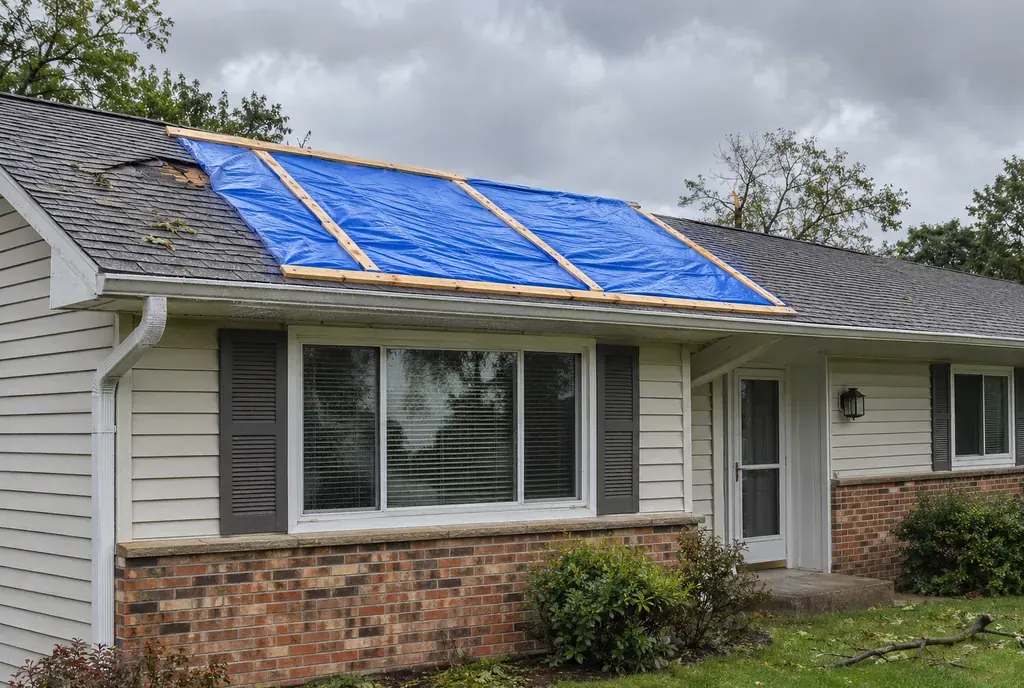
Hail or wind damage? Emergency roof repair steps for SW Missouri
Springfield gets real hail. On April 28, 2026, a supercell crossed the Springfield metro with hail from baseball size up to 4.75 inches, and the National Weather Service reported damage to roofing, siding, gutters and windows on thousands of homes.[1] Insurers took thousands of claims in the weeks after.[2] Hail-bruised shingles can look fine from the yard and still leak at the next hard rain.
If a storm caused your leak, the Missouri Department of Commerce and Insurance advises:[3]
- Photograph the damage before any temporary repair, and keep receipts for tarps and materials.
- Cover openings to stop more water getting in. Damage that gets worse because nothing was done may not be covered.
- Call your insurer promptly, and don't make permanent repairs until they've inspected.
- Watch who's on your roof. Don't let a contractor inspect when you aren't there, and don't pay the whole bill in advance.
Questions about a claim? The state's Insurance Consumer Hotline is (800) 726-7390.[3]
What happens when you call
- Your call is connectedDial (417) 647-4675. The call goes to a local roofing contractor serving Springfield and the 417.
- Tell them what you foundWhere the stain is, when it leaks, the roof's age if you know it, and any recent storm. Have your photos ready to text.
- Get a plan and a priceThe roofer sets up an inspection or a temporary tarp and gives you their own pricing. You decide whether to go ahead.
Roof still leaking?
Call for roof leak repair or an emergency tarp from a local roofer serving Springfield and the 417.
Areas served
Calls are connected to a roofer serving homes in Greene and Christian counties, in and around:
- Springfield
- Nixa
- Ozark
- Republic
- Battlefield
- Rogersville
- Strafford
- Willard
Who runs this site
Springfield Roof Leak Help is a locally run information site. We publish safety-first guidance for homeowners and connect callers to a local roofing contractor, who does the inspection and the repair.
Roof leak repair in Springfield: common questions
What should I do first when my roof is leaking?
Catch the water with a bucket, move furniture and electronics, and switch off the breaker for any light or outlet the water is near. Take photos, then call a roofer. Stay off the roof, especially when it is wet, icy, dark or windy.
Is a roof leak an emergency?
Treat it as one if water is near wiring, the ceiling is sagging, or water is running steadily. A slow drip can wait for daylight but not for weeks: wet drywall and insulation can start growing mold within a day or two, and every rain adds damage.[4]
Why is my roof leaking when the shingles look fine?
Most leaks start at joints, not in the open shingles: the rubber boots around vent pipes, the metal flashing at chimneys, walls and skylights, and the valleys where two slopes meet. Water also travels along the framing, so the stain is often several feet from the entry point.
Why does my roof only leak in winter or after snow?
Two common causes. Ice dams form at the eaves and back melting snow up under the shingles. Or warm, moist air from the house condenses in a cold attic and drips, which looks like a leak but is a ventilation and insulation problem.
Does homeowners insurance cover a roof leak?
It depends on your policy and the cause. Sudden damage from wind, hail or a fallen limb is often covered; wear, age and lack of maintenance usually are not. Photograph the damage, stop it from getting worse, and ask your agent or insurer before assuming either way.
Can a roof leak be repaired, or do I need a new roof?
Many leaks are a one-spot repair: a pipe boot, a section of flashing or a few shingles. Replacement comes up when the roof is near the end of its life or the damage is spread across it. A roofer should show you photos of what they found.
Who do I call for emergency roof repair in Springfield, MO?
Call (417) 647-4675. Your call is connected to a local roofing contractor serving Springfield, Nixa, Ozark, Republic and nearby towns. Ask for a temporary tarp if a permanent repair has to wait for dry weather. If a tree or power line is on the house, call 911 first.
What should I do after hail or wind damages my roof?
Photograph the damage before any temporary repair, cover openings to stop more water getting in, and keep receipts. Call your insurer promptly. Missouri's insurance department advises holding off on permanent repairs until the insurer inspects, and not paying a contractor in full upfront.
Sources
- National Weather Service Springfield, Hailstorm April 28th 2026.
- KY3, Thousands file insurance claims after southwest Missouri hail storm (May 4, 2026).
- Missouri Department of Commerce and Insurance, Resources for Severe Weather Victims.
- U.S. EPA, A Brief Guide to Mold, Moisture and Your Home (dry wet materials within 24–48 hours).
- U.S. Consumer Product Safety Commission, Consumer Product-Related Injuries and Deaths, 2024, Table F.
Page last reviewed November 18, 2026.